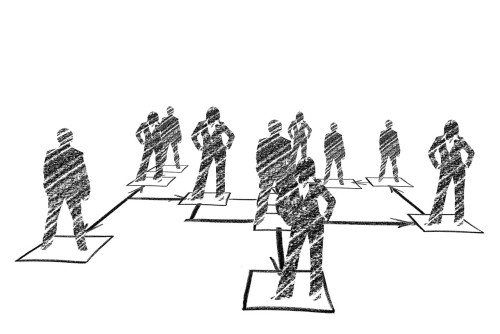
Convene for the Cities ERP/DXP rich commitment to utilizing business rules allows one group’s organization to work differently than other groups preferences. You don’t change the way you work due to technology. The technology blends in and works the way you want and need. The hierarchical structures enable administrators to define a set of rules that allows the user to determine what happens between different relationships.


Key Features
- Relationship Rules
- Group Relationships
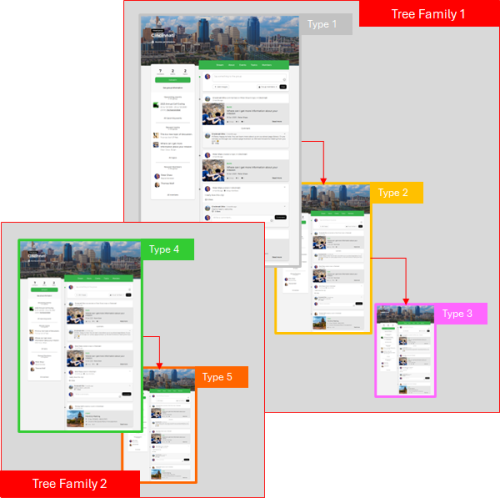
- Tree Families

Benefits
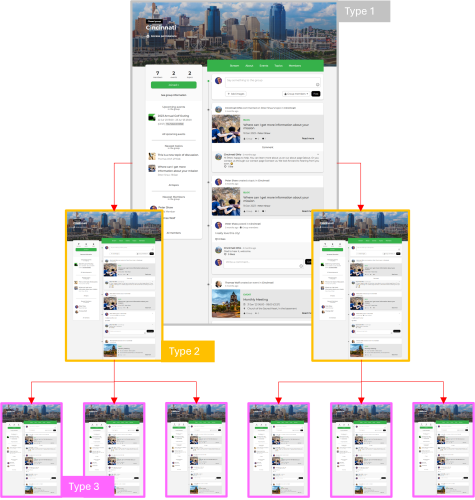
- Group types: Create different types of groups that can be related to other group types.
- Custom Relationships: Define how groups relate to one another through custom relationships.
- Content sharing: Groups within a relationship can be configured to share content with one another.
- Member sharing: Groups within a relationship can allow members to automatically join other groups based on the configured membership rules.
- Restrict relationships based on group types.
- When creating a relationship rule, you can specify Primary & Secondary Group types, Action, Content types.
Revenue Generation
- Membership Revenue – multi-level dues, paywall add-ons, recurring & auto-renewal dues, membership sponsorships, membership discounts & coupons, member advertising.
- Donation Revenue – 1-time donations, scheduled/recurring donations, capital campaigns/pledges, memorial gifting, sponsorships, advocacy, donations with merch premium incentives, corporate matching, community investment campaigns.
- Event Revenue – multi-level event sponsorships, individual registrations, group registrations, event-branded merch sales, event advertising, early registration discounts/coupons, gala/golf/auction revenue, "A-Thon" events, Text2Bid & Text2Fund.
- E-Learning Revenue – metadata, unlimited classes/sales, e-learning content syndication, e-news advertising, podcast advertising, seo/TQI network, referral programs, merch & book sales, living streams business residuals, ancillary e-learning add-ons such as service fees & commissions, etc.