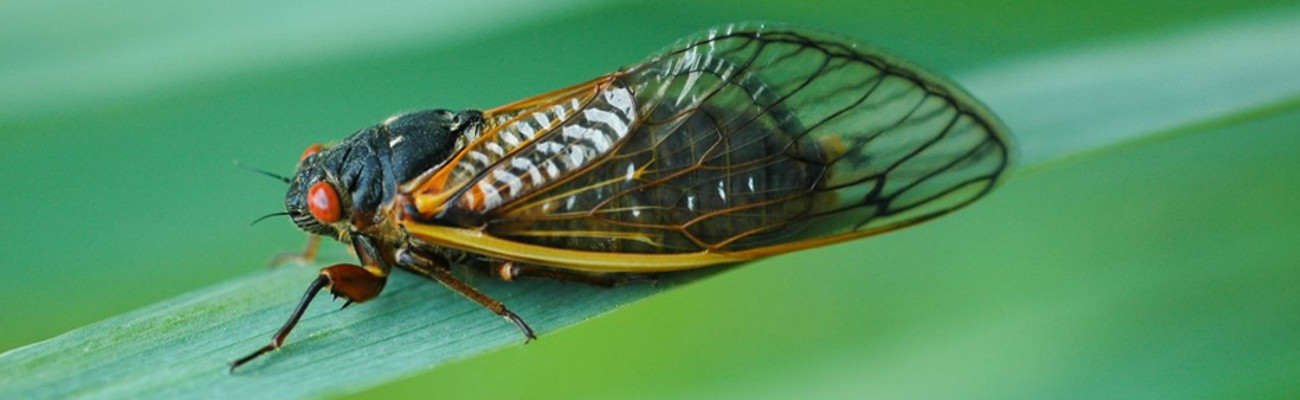
What If We Were Part Cicada?
A 17-Year Reflection on Faith, Culture, and Wake-Up Calls
We’re stepping away from our usual format for a little something different—equal parts fun, serious reflection, and a dash of cicada-themed curiosity. As we write, the 17-year Cicada Brood is bursting out of the ground in Ohio, preparing to serenade us with their signature buzz for the next six weeks.
Now imagine, just for a moment: what if we were part cicada? Every 17 years, we’d crawl out of our comfy underground hideaways, rub our eyes (or wings), and be hit with the jarring realization: “Whoa… the world changed while I was napping!”
Well, my first cicada emergence was in 1957—technically, I wasn’t born yet, but I was, as they say, “a glint in my mother’s eye.” And still, as Psalm 139 reminds us:
"You formed my inward parts; you knitted me together in my mother’s womb... in your book were written every one of them, the days that were formed for me.” —Psalm 139:13–16
Cicada Year #1: 1957
The world I was being born into...
U.S. Politics:
- The Cold War was heating up—Sputnik launched.
- The Civil Rights Movement sparked with the Little Rock Nine.
- The Eisenhower Doctrine pledged U.S. support against Middle East communism.
Church:
- Mainline Protestant churches were the cultural center.
- Billy Graham’s influence was going mainstream.
- Sunday School & VBS were sacred childhood rituals.
Economy:
- America was booming—suburbs, factories, optimism.
- Inflation murmurs began.
- The American Dream was shiny and well-funded.
Technology:
- Black-and-white TVs beamed in I Love Lucy.
- Computers were room-sized and top-secret.
- Transistor radios: the first taste of portable sound.
Cicada Year #2: 1974
Now I was in high school, dreaming big—and completely oblivious to the world burning around me.
U.S. Politics:
- Watergate exploded. Nixon resigned.
- The Vietnam War wound down; public trust in government collapsed.
- A conservative shift quietly gained momentum.
Church:
- The Jesus Movement stirred young hearts (and guitars).
- Charismatic Renewal caught fire in denominations.
- The Moral Majority began forming its political identity.
Economy:
- Gas was $0.45—but good luck finding it.
- Stagflation replaced stability. Mortgages were 10% moving to 16.67%
- Nixon took us off the gold standard, forever altering money.
Technology:
- Microwaves entered homes (not mine—had to wait till 1985).
- Pong redefined Friday nights.
- The Altair 8800 hinted at a digital future.
Honestly? I wasn’t paying much attention. I was on fire to slay dragons, finish high school early, and step into pastoral ministry. Like a sleepy cicada, I crawled back into my comfort zone.
Cicada Year #3: 1991
This time, I woke up a bit. The world was changing—and I could feel it.
U.S. Politics:
- The Cold War ended (thank you to President Reagan).
- The Gulf War revealed a new kind of warfare.
- Globalism began to dominate economic strategy.
Church:
- Mega-churches rose, and hymnals gave way to worship bands.
- Christian media expanded its reach.
- The culture war was no longer theoretical—it was Sunday morning.
Economy:
- A recession followed the military boom.
- The dot-com bubble began forming.
- Global supply chains reshaped business.
Technology:
- Internet entered homes—slow, noisy dial-ups. (I miss my 800 baud modems)😊
- The first website was born. (“Thanks to V.P. Al Gore”)
- Cell phones were still bricks, mostly in cars.
I was now part pastor, part tech entrepreneur—and part restless. I wasn’t sleeping well. I sensed something deeper shifting, but couldn’t quite name it.
Cicada Year #4: 2008
Now things got personal. The world shook. And so did I.
U.S. Politics:
- Barack Obama elected. Hope met deepening division.
- The Tea Party arose.
- Cultural lines hardened into concrete.
Church:
- Church attendance declined sharply.
- The rise of the “Nones” reshaped faith demographics.
- Streaming services and online sermons became standard.
Economy:
- The housing crash hit hard.
- Unemployment soared, families lost homes.
- Stimulus and quantitative easing redefined money yet again.
Technology:
- The iPhone launched. ( Still loving my Android! We never looked back.)
- Facebook and Twitter exploded—so did attention spans.
- The cloud began replacing our hard drives.
I realized something: I had become one of the "noners." Not because I lost faith in God—but because I was grieving what much of the institutional Church had become: disconnected, irrelevant, and often woke or asleep.
I began soaking in the presence of the Holy Spirit. I studied spiritual warfare, watched the business world shift, and sensed God stirring a marketplace movement—what I now call the rise of President-Pastors. Business leaders who disciple through business. Kingdom pioneers, not just consumers.
Cicada Year #5: 2025 (Now)
This isn’t just another emergence. This is a wake-up call.
We’re living in a post-PLANdemic, digitally dominated, and culturally fractured world. But there’s a hunger for truth. A cry for clarity. A call to re-engage, together.
So, Here's the Real Question:
Will we once again crawl back into our sleepy holes—only to emerge in 2042, stunned by how much ground we’ve lost?
Will the Muslims still be investing $14 out of every $15 dollars into other Muslim businesses and Christians still investing less than $1.00 out of every $15 into other Christian businesses, NPOs and ministries?
Will the Church, nonprofits, and faith-driven businesses still be operating in silos, disconnected and ineffective, when the next Cicada sings?
Or will we finally realize that Kingdom impact demands Kingdom unity?
Because this time, we cannot afford to go underground again.
This time, we must stay awake.
This time, we must face the truth: that gathering for prayer and singing songs once a month—while important—is not obedience if it doesn’t lead to collaborative action, shared sacrifice, and measurable transformation.
If we claim to be the Body of Christ in motion, then show me the fruit.
Show me the evidence.
Show me the numbers.
Show me the metrics that prove we are actually making disciples, transforming communities, and stewarding the mission we’ve been entrusted with.
If we can’t measure it, are we really doing it?
Join us. Convene For The Cities. Let’s work – as One – THE Body of Christ Alive and Well and for Eternity!
Contact Us To Begin a Conversation
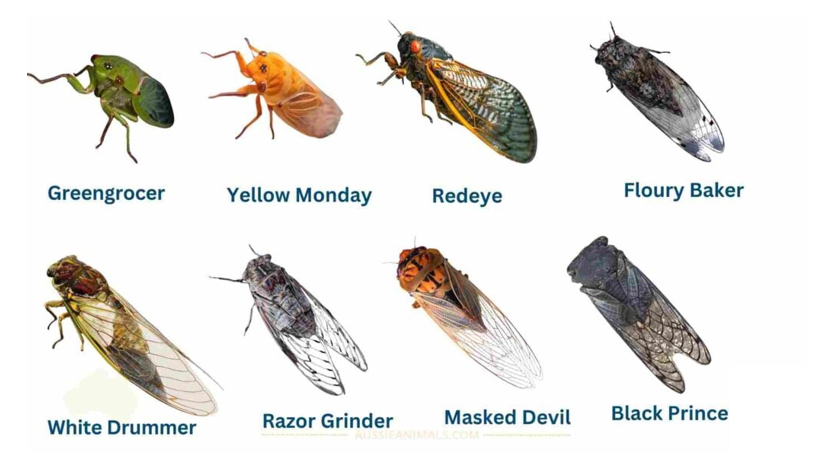
Cicada Fun Facts: Types
(3) different types of Cicadas and their emergence cycles:
17-Year Cicadas (Periodical Cicadas – Magicicada)
- These are Brood-based cicadas with synchronized mass emergences.
- Brood XIII (17-year) is one of the ones emerging in 2025, including Ohio.
- There are multiple 17-year broods across the U.S., each with its own geographic area and emergence year.
13-Year Cicadas (also Periodical Cicadas – Magicicada)
- These cicadas emerge on a 13-year cycle and are more common in the southern U.S.
- Sometimes, in rare years (like 2024), both 17- and 13-year broods can emerge simultaneously but in different regions.
Annual Cicadas (Dog-day or Summer Cicadas – Neotibicen)
- These are entirely different from periodical cicadas.
- Appear every summer or late summer, especially July to September.
- They are larger, greenish or black, and louder.
- Lifecycle: They still live underground for 2–5 years, but their emergences are staggered, so some appear every year.
MORE Cicada Fun Facts: Life Cycle
Cicadas are among the longest-living insects, but they spend 90–99% of their lives underground.
The life cycle of a cicada is one of the most fascinating in the insect world—especially for periodical cicadas like those in the 17-year and 13-year broods. Here's a clear breakdown of their full life cycle:
1. Egg Stage
- Timing: Summer (shortly after mating)
- Female cicadas lay hundreds of eggs in slits they carve into the branches of trees and shrubs.
- After 6–10 weeks, the eggs hatch.
2. Nymph Stage
- Newly hatched nymphs drop from the trees to the ground.
- They burrow into the soil and begin feeding on xylem fluid from tree roots.
- This is the longest phase of their life cycle:
- Periodical cicadas (Magicicada): stay underground for 13 or 17 years.
- Annual cicadas (e.g., Neotibicen): stay underground for 2 to 5 years, but emerge every summer because generations are staggered.
3. Emergence
- When the soil reaches about 64°F (18°C) at 8 inches deep—typically in late spring—the nymphs dig upward.
- They emerge en masse, often at night, and climb trees or vertical surfaces.
4. Molting (Final Instar to Adult)
- The nymphs shed their exoskeleton in one final molt, transforming into winged adults.
- This transformation happens within a few hours and leaves behind the familiar brown shells.
5. Adult Stage
- Adult cicadas live 4–6 weeks.
- Their goals:
- Males: sing loudly to attract females.
- Females: mate and lay eggs.
- Adults do not bite or sting, and feed only sparingly on plant sap.
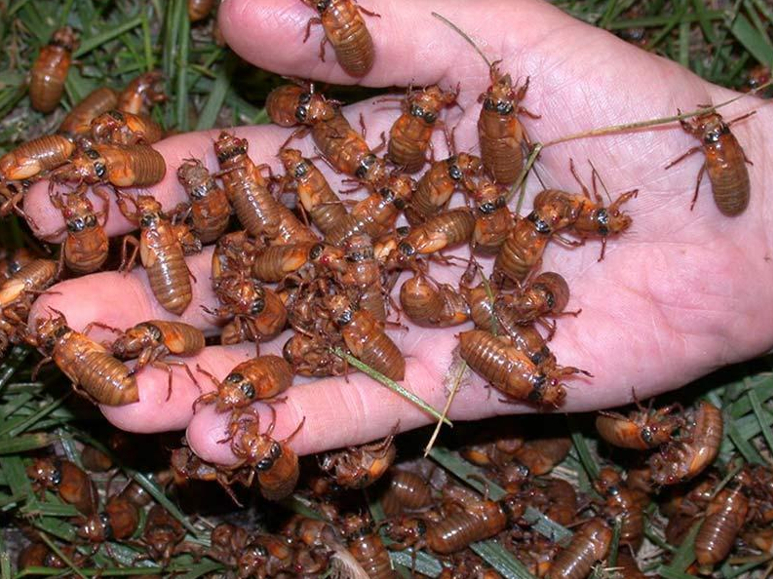
Regions with Cicadas
Cicadas are found on every continent except Antarctica, with over 3,000 known species worldwide. While the U.S. is famous for its periodical cicadas (Magicicada), other regions have their own varieties.
Japan
- Home to some of the most culturally iconic cicadas.
- Common species:
- Higurashi (evening cicada)
- Abura-zemi, Minmin-zemi
- Cicadas in Japan are seasonal symbols of summer and are often heard in anime, films, and city parks.
Australia
- Known for diverse and colorful cicadas.
- The Green Grocer and Yellow Monday cicadas are popular.
- Some of the loudest cicadas in the world come from Australia.
China
- Cicadas have symbolic meaning in Chinese art and literature (representing rebirth and immortality).
- Found throughout forests, orchards, and gardens.
India
- Multiple species across various climates.
- Most are annual cicadas, appearing during or after monsoon seasons.
Other Places
- Europe: Southern regions like Greece and Italy.
- Africa: Tropical and subtropical zones.
- South America: Brazil, Argentina, and more.
- Southeast Asia: Thailand, Vietnam, Indonesia.
Listen to 1 Trillion Cicadas (Fun Views & Sounds)

Cicadas: It’s What’s For Dinner!
Think about it. John the Baptist ate locusts and honey. Locusts are in the Cicada family!
“John’s clothes were made of camel’s hair, and he had a leather belt around his waist. His food was locusts and wild honey.”
— Matthew 3:4 (NIV)
Are you up for Bug Breath? Here are a few recipes to consider:
- Cicada Stir-Fry from THE Ohio State University
Jim Warner, a retired chef from Ohio State University’s Wexner Medical Center, offers a cicada stir-fry recipe that combines blanched cicadas with vegetables like carrots, cauliflower, and snow peas. The cicadas are first blanched in boiling water for one minute, then sautéed with the vegetables and served over whole-grain rice with soy sauce. Source: https://health.osu.edu/wellness/exercise-and-nutrition/cooking-cicadas
- Crispy Cicada Salad from The Penny Hoarder
Source: https://www.thepennyhoarder.com/save-money/cicadas-recipes/
- Tempura-Fried Cicadas by Chef Joseph Yoon
Chef Joseph Yoon, founder of Brooklyn Bugs and advocate for edible insects, has created tempura-fried cicadas. He describes cicadas as having a "beautiful vegetal quality and a nutty quality" due to their diet of plant and tree xylem. After blanching and freezing the cicadas, he prepares them with tempura batter and fries them until crispy. Source: Serious Eats+3WVXU+3Time+3
- Spicy Thai Cicada Pizza by The Pizza Bandit in Dayton
The Pizza Bandit, a Dayton-based pizzeria, experimented with a "Spicy Thai Cicada Pie." This 18-inch pizza featured miso hoisin sriracha sauce, mozzarella and provolone cheeses, sautéed cicadas, mushrooms, cabbage, green onions, mango, cilantro, and a cicada wing crust. While the pizza was not added to their regular menu, it garnered attention for its innovative use of cicadas. Source: WSLS+1WHIO TV 7
Safety Note: If you have a shellfish allergy, it's advisable to avoid consuming cicadas, as they are biologically related to shrimp and lobsters. Source: WVXU+5Allrecipes+5
"At Convene, we don't do what you do -
we help you do what you do even better."
Find More Newsletters